I was reading a Mike Keneally post today, and this concept popped into my mind.*
It’s actually a basic economics principle called productive efficiency.
And it certainly applies to working as a musician!
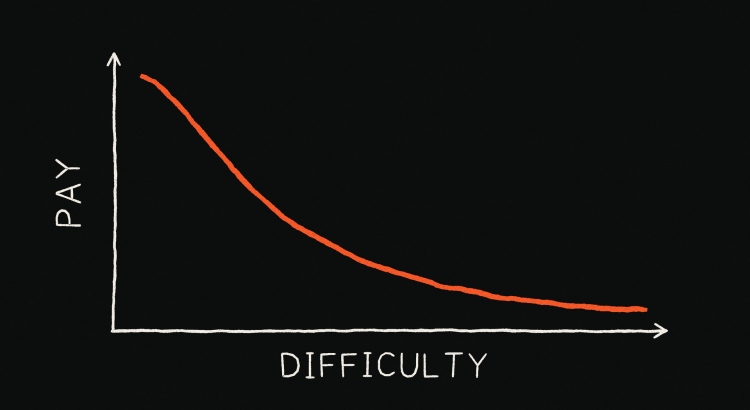
I asked my digital friend, George P. Thistlebottom, to create this chart:
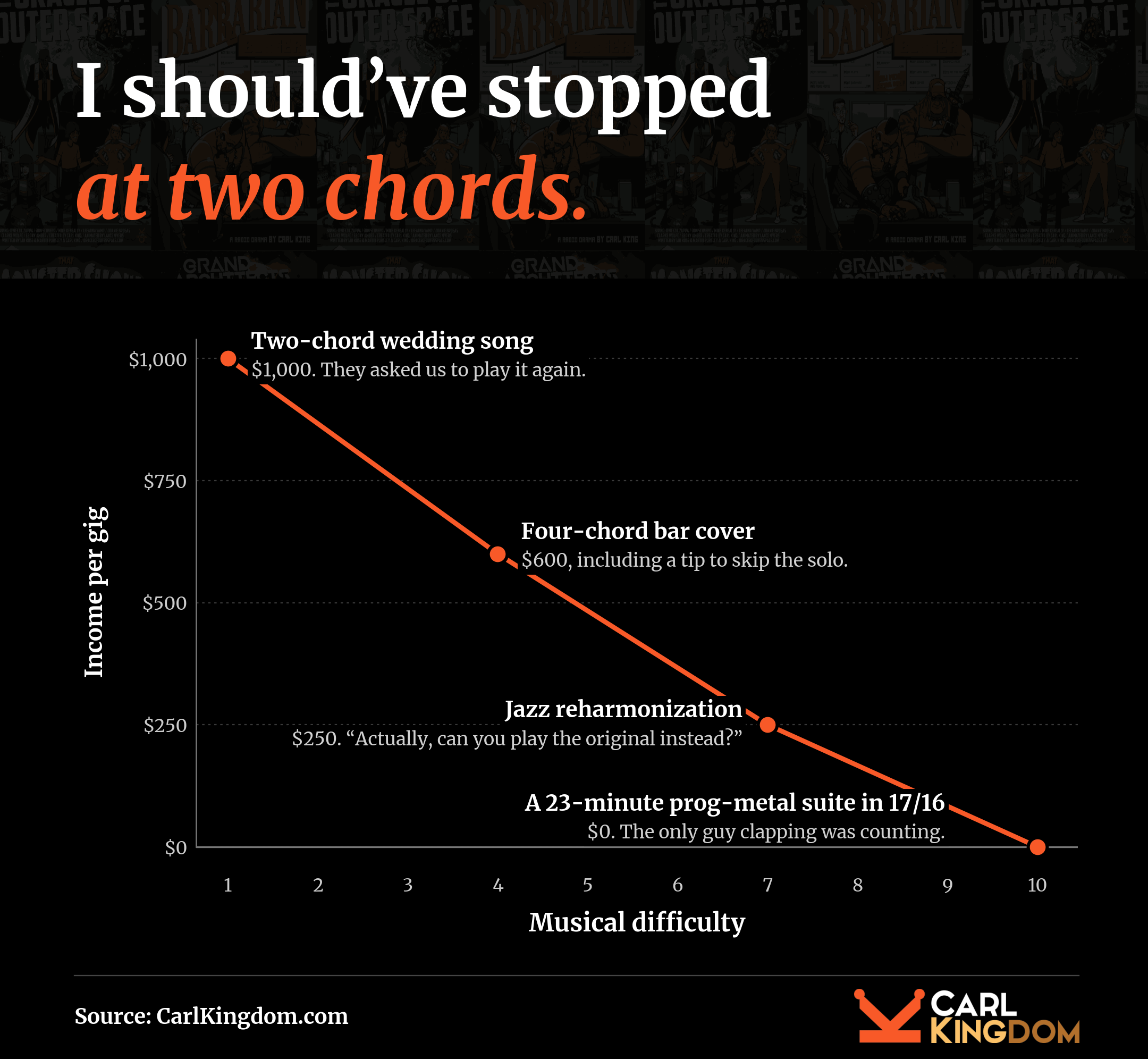
The general principle here is: pay and difficulty are inverse.
There are certainly exceptions.
But for instance, if you are paid a flat rate for a (musical) project, the faster you can get it done, the more you are paid per hour — and the more projects you can complete in that time. If your cost goes down, your profit goes up.
But here’s the double-curse of prog rock: not only is it hard to learn and play, it is hard to get anyone to pay you for it. The audience is tiny.†
On the bell curve, the majority of listeners do not understand complicated music. (And might not even know it is music.)
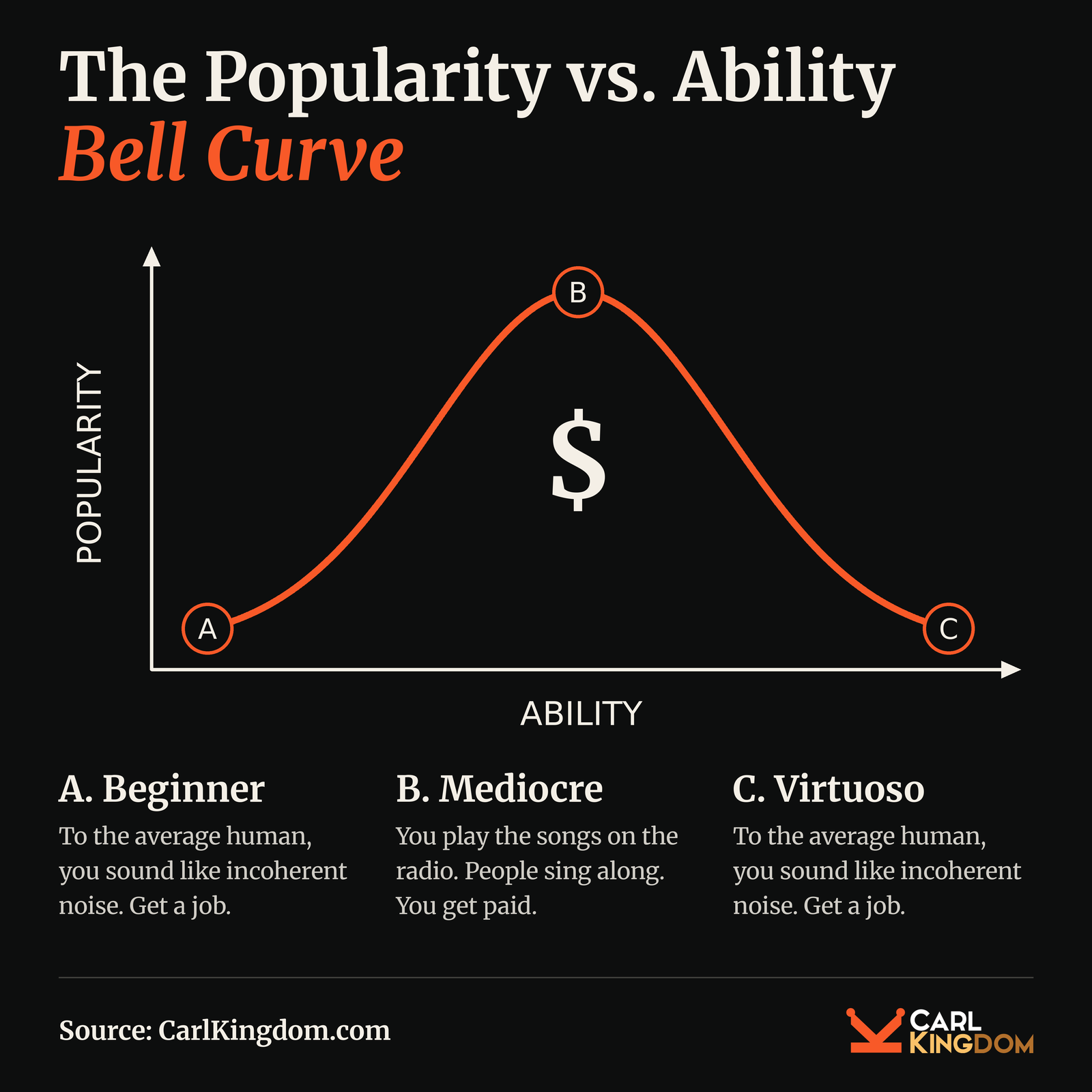
Being a prog-rock musician is like riding a bike in the wrong gear… up a down-escalator.
A similar funny equation, “Chords x Listeners = 50” appears on All About Jazz.
This is not necessarily something to be angry about. “Those are called… THE FACTS!” as Jim Rohn liked to say.
Or as Alex Hormozi says about doing things that are hard: “And…?”
I have quite a lot to say about this topic of music and economics, but it might require a whole book. This was the easiest place to start.
*In his journal entry, Mr. Keneally referred to some exhaustion he experienced: “…the very nature of the material that I tend to be hired to play, which is usually pretty demanding…”
†So tiny, in fact, they can all fit comfortably in a venue called The Baked Potato, where the greatest musicians in the world gather to perform under a leaky AC unit.